Is Curing Patients a Sustainable Business Model? What Goldman Sachs Got Right—and Wrong in 2026
Updated September 2026
In April 2018, a Goldman Sachs research report created an uncomfortable debate about the economics of modern medicine.
The question was blunt:
“Is curing patients a sustainable business model?”
The report, titled The Genome Revolution, was discussing the emergence of gene therapy, genetically engineered cell therapy and gene editing. Its central observation was economically logical: a therapy that permanently eliminates a disease can reduce the number of people who need that therapy again.
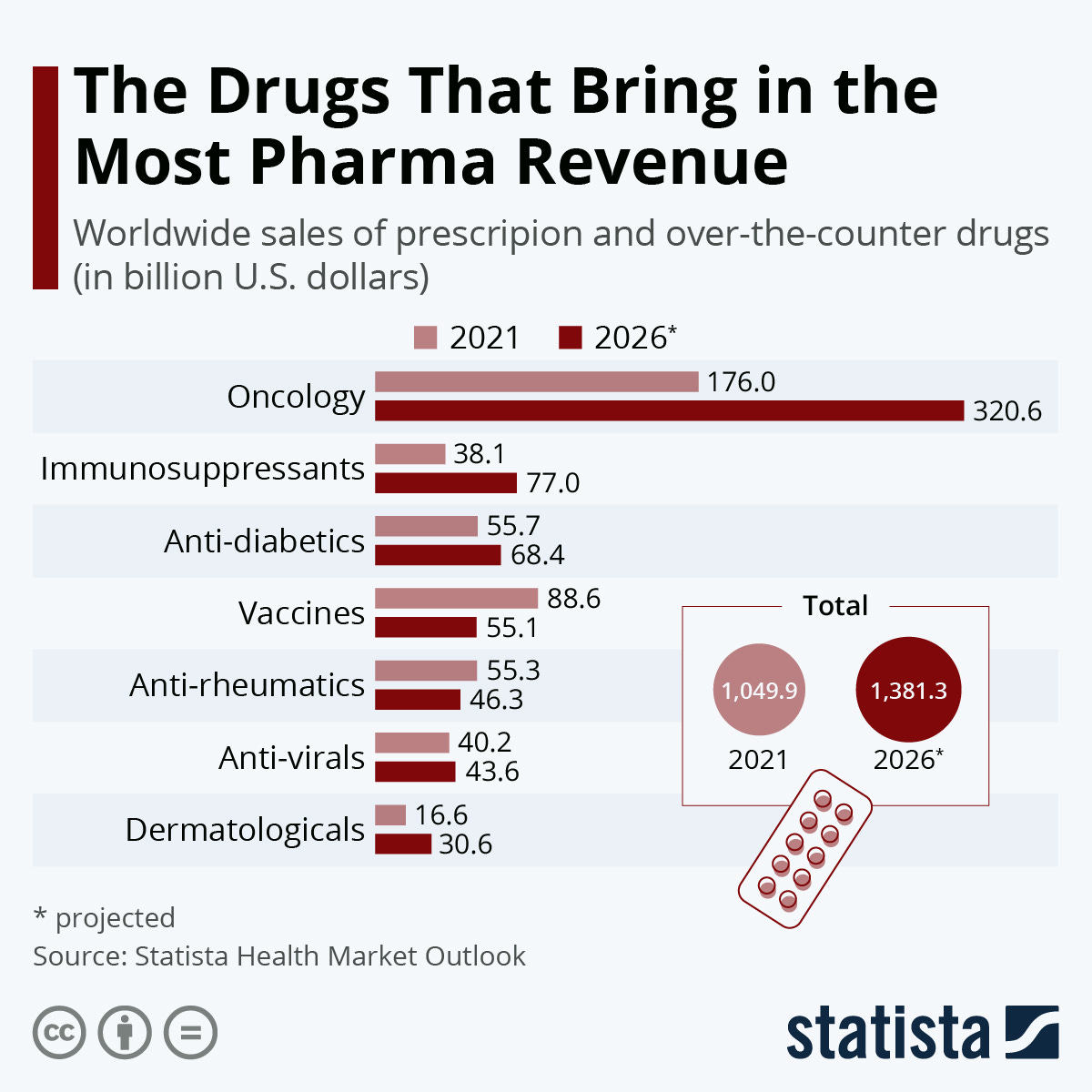
That creates an obvious difference between a curative or potentially one-time treatment and a chronic therapy that patients may take for years or decades.
Goldman Sachs pointed to Gilead Sciences' hepatitis C franchise as an example. Gilead's highly effective hepatitis C therapies rapidly reduced the pool of untreated patients, causing sales to fall after the franchise reached its peak. Contemporary reporting quoted the Goldman analysts as arguing that the success of a cure can eventually “exhaust” the pool of treatable patients.
The observation was controversial because it appeared to reduce an extraordinary medical achievement—curing disease—to a question of recurring revenue.
But the underlying economic question remains important in 2026.
The difference is that we now have several years of real-world experience with gene therapies, cell therapies and other potentially durable treatments. That experience suggests the original question was too narrow.
The 2026 answer: A cure can absolutely be a sustainable business model—but the economics are different. The sustainable model is increasingly based on high upfront value, durable outcomes, larger eligible populations, multiple indications, platform technologies, portfolio diversification and payment systems that recognize long-term value.
The Original Goldman Sachs Argument
Traditional pharmaceutical economics often favor recurring treatment.
A patient with hypertension may take medication for decades. A patient with diabetes may remain on treatment indefinitely. A patient with rheumatoid arthritis may require long-term biologic therapy.
From the perspective of recurring revenue, these therapies create a predictable commercial model:
- large patient population;
- ongoing treatment;
- recurring prescriptions;
- long-term revenue visibility.
A successful cure behaves differently.
A patient who receives a truly curative treatment may need little or no additional treatment for that disease. In economic terms, the pharmaceutical company's revenue may resemble a series of large individual transactions rather than an annuity.
This distinction becomes particularly important when the disease is infectious and successful treatment also reduces transmission.
Hepatitis C is a particularly useful example. Highly effective direct-acting antiviral medicines transformed treatment, with cure rates above 90% for many patient groups. The result was a remarkable medical success—but also a declining pool of untreated patients.
That phenomenon was exactly the type of commercial risk Goldman Sachs was highlighting in 2018.
The Important Distinction: Business Sustainability vs. Social Value
Here is where the 2018 debate needs more nuance.
A treatment can be commercially unsustainable as a recurring product while being extraordinarily valuable to society.
Those are not contradictory statements.
Suppose a company develops a treatment that permanently eliminates a serious disease.
The company may eventually have fewer patients to treat.
But society may gain:
- lower healthcare utilization;
- fewer hospitalizations;
- less disability;
- greater workforce participation;
- longer life expectancy;
- fewer complications;
- lower caregiver burden; and
- higher productivity and quality of life.
The economic value created by the cure therefore extends far beyond the manufacturer's product revenue.
This is one of the most important conceptual mistakes in treating pharmaceutical revenue as equivalent to healthcare value.
Healthcare systems should ultimately care about health outcomes, not how many prescriptions are sold.
Gilead's Hepatitis C Experience Was Real—but It Was Also an Unusual Case
Hepatitis C illustrates the problem particularly well because the disease has a finite prevalent pool of infected people and treatment can eliminate the virus from an individual.
Once large numbers of patients are successfully treated, the number of untreated patients decreases.
That is very different from diseases in which:
- new patients continually enter the population;
- the disease is driven by aging;
- risk factors remain widespread;
- new diagnostic technologies identify previously undiagnosed patients; or
- the original treatment expands into additional indications.
And there is another important point.
Gilead itself did not disappear after hepatitis C revenue declined.
The company diversified into HIV, oncology, liver disease, inflammation and other areas.
Gilead reported approximately $28.9 billion in product sales in 2025, with HIV products generating approximately $20.8 billion. Its hepatitis C products remain part of its liver-disease portfolio even though HCV pricing and demand are far below the levels seen during the franchise's peak.
This points toward a better pharmaceutical business strategy:
Do not depend on one disease forever. Build a portfolio capable of replacing successful products as diseases become better treated.
The Genome Revolution Has Actually Arrived
One of the fascinating aspects of the 2018 Goldman report is that technologies it described as emerging have since become clinical realities.
Gene therapy, engineered cellular therapy and genome editing are no longer purely futuristic technologies.
In December 2023, the U.S. Food and Drug Administration approved Casgevy for sickle cell disease, making it the first FDA-approved therapy using CRISPR/Cas9 genome editing. The FDA subsequently expanded the approval to younger patients in 2026 and the product is also approved for transfusion-dependent beta-thalassemia.
Other gene and cell therapies have also entered clinical practice. The FDA now maintains a substantial list of approved cellular and gene therapy products, including CAR-T therapies and genetically modified products.
In March 2024, the FDA approved Lenmeldy, the first gene therapy for children with metachromatic leukodystrophy, a devastating inherited neurological disorder.
The commercial implications are profound.
These therapies can involve enormous development costs, complex manufacturing, specialized treatment centers and long-term follow-up—but the treatment itself may be administered only once or over a very limited treatment course.
That forces the industry to rethink what “revenue sustainability” actually means.
One-Time Treatment Does Not Mean One-Time Economic Value
This is the key idea missing from much of the public discussion surrounding the 2018 Goldman report.
A treatment may be administered once while generating substantial economic value over many years.
Imagine a therapy that prevents:
- multiple hospital admissions;
- lifelong supportive medications;
- organ damage;
- repeated procedures;
- loss of employment;
- disability;
- caregiver costs; and
- premature death.
The manufacturer's revenue may occur largely at the beginning.
The economic benefit to the patient and healthcare system continues long after administration.
That creates a fundamental mismatch between traditional pharmaceutical accounting and the economics of curative medicine.
The Pricing Problem: How Do You Pay for a Cure?
This creates another problem.
If a therapy replaces decades of healthcare costs, what should it cost?
Traditional drug pricing tends to think in terms of price per prescription, price per month or price per treatment cycle.
A potentially curative therapy can require a very different model.
Instead of charging a relatively small amount repeatedly, the manufacturer may need to charge a very large amount upfront because the product is capturing part of the economic value it creates over many years.
This is one reason some gene therapies can carry extremely large headline prices.
But a high upfront price creates another problem:
The payer may bear the cost today while the financial benefits arrive over many years.
This is particularly difficult for government programs and insurers because patients can change insurers, employers or geographic locations over time.
The insurer that pays for the treatment today may not be the entity that benefits from reduced costs ten or twenty years later.
Healthcare Is Beginning to Experiment With a Different Model
This is where the healthcare system has moved considerably beyond the debate of 2018.
One emerging answer is outcomes-based payment.
Instead of treating a gene therapy as an ordinary transaction, payment can be linked to whether the therapy actually delivers the promised clinical result.
CMS's Cell and Gene Therapy Access Model is an important example. States began participating between 2025 and 2026, with manufacturers offering outcomes-based arrangements for sickle cell gene therapies. Under the model, participating states can receive discounts or rebates when therapies fail to deliver specified therapeutic benefits.
In July 2025, CMS announced that 33 states, the District of Columbia and Puerto Rico had signed agreements to participate, representing approximately 84% of Medicaid beneficiaries with sickle cell disease.
This is a significant conceptual shift.
The question is no longer simply:
“How much should a one-time cure cost?”
It becomes:
“How should society pay for durable health outcomes when the value extends far beyond the initial treatment?”
The New Business Model: Capture Value, Not Recurring Disease
The long-term opportunity for biotechnology may therefore look very different from the traditional blockbuster-drug model.
A successful company does not necessarily need patients to remain sick.
Instead, it can create a portfolio in which breakthrough products generate substantial value and the company continually reinvests that capital into the next generation of therapies.
That model resembles technological industries more than conventional subscription businesses.
A company may replace its own technology rather than depend indefinitely on the same product.
In biotechnology, that can mean:
- launching multiple indications;
- developing next-generation versions;
- building platform technologies;
- entering adjacent diseases;
- acquiring new assets;
- expanding internationally;
- developing combination treatments; and
- reinvesting cash flow into the pipeline.
The commercial objective changes from maximizing duration of illness to maximizing the value created by innovation.
Why Cancer Changes the Equation
Goldman Sachs' original report also made an important distinction: diseases such as common cancers can have a continuing incident population.
That means even a highly effective therapy does not necessarily eliminate the overall market.
New patients continue to be diagnosed.
But cancer is more complicated than simply saying that a stable incident pool solves the business problem.
Cancer is not one disease.
There are hundreds of biologically distinct malignancies, molecular subtypes and treatment contexts.
Patients can also move through multiple therapeutic stages:
prevention → early detection → diagnosis → surgery → radiation → systemic therapy → maintenance → recurrence → resistance → later-line treatment → survivorship or palliative care.
This creates a very different commercial ecosystem from a single infectious disease that can be eliminated with a finite treatment course.
It also means that even transformative cancer therapies may exist within a much larger treatment landscape.
The recent expansion of precision oncology demonstrates this clearly. In 2026, the FDA continues to approve therapies linked to specific biomarkers, mutations and treatment-resistance states, including therapies for HER2-mutated lung cancer, ESR1-mutated breast cancer and treatment-resistant melanoma.
In other words, the future of oncology is increasingly about matching the right therapy to the right biological state, not simply selling one drug to everyone with the same diagnosis.
What Happens When the Cure Is Not Permanent?
There is another important complication.
Many therapies described as “curative” may actually produce very durable remission rather than guaranteed lifelong eradication of disease.
That distinction matters commercially as well as medically.
A treatment may dramatically reduce disease burden while some patients eventually relapse.
In oncology, recurrence and resistance can create entirely new treatment populations.
CAR-T therapy is a useful example of the broader principle: highly advanced cellular therapies can create powerful responses, but they exist within an evolving ecosystem of subsequent therapies, competing products and additional indications.
The FDA's current cellular and gene therapy portfolio includes products across cancer, blood disorders and inherited diseases, illustrating how the field has moved from experimental science into a broader therapeutic platform.
The Real Risk May Not Be Curing Patients
The more interesting investment question in 2026 is therefore not:
“Will cures destroy pharmaceutical revenue?”
It is:
“Can biotechnology companies convert breakthrough scientific value into durable enterprise value?”
That requires answering several questions.
Can the company manufacture the therapy at scale?
Can hospitals administer it safely?
Can payers afford the upfront cost?
Can the company demonstrate long-term durability?
Can it expand into additional indications?
Can it maintain a competitive pipeline?
Can the company generate sufficient cash flow to replace products whose markets mature or disappear?
These questions are considerably more useful for investors than simply asking whether a therapy is a one-time treatment.
The Future May Favor Platform Companies
The strongest biotechnology businesses may increasingly resemble technology platforms.
A platform can generate multiple products from the same underlying technological capability.
For example, a company may develop a gene-editing technology that can potentially be adapted across several diseases.
The first approved therapy may serve as the commercial validation of the platform rather than the end of the story.
This dramatically changes the economics.
Instead of:
one drug → one disease → one revenue stream
the model becomes:
platform → multiple indications → multiple products → expanding addressable markets.
The same principle applies to cell therapy, RNA technologies, targeted oncology platforms, antibody engineering and other advanced therapeutic technologies.
The Investment Lesson: Don't Confuse Revenue Recurrence With Business Durability
Investors sometimes equate recurring revenue with a durable business.
That is reasonable in many industries.
But healthcare is different.
A recurring-revenue pharmaceutical product may remain dependent on a disease that the healthcare system would ideally eliminate.
A curative therapy may produce less recurring revenue but dramatically more value per patient.
The relevant investment question is therefore not merely:
“Does the company get paid again next year?”
It is:
“Can the company repeatedly create high-value medical innovations?”
A biotechnology company with one extraordinary cure and no pipeline may be financially fragile.
A biotechnology company with a validated platform, multiple programs, strong intellectual property, manufacturing capabilities and a deep pipeline may be extremely durable—even if individual products eventually cure the diseases they target.
A Better Framework for Evaluating Curative Biotech Businesses
| Factor | Why It Matters |
|---|---|
| Durability of benefit | The longer the clinical benefit lasts, the greater the potential value per treatment. |
| Eligible population | A cure for a tiny population has different economics from a therapy applicable to millions. |
| Manufacturing | Complex manufacturing can become the commercial bottleneck even after clinical success. |
| Reimbursement | High upfront prices require innovative financing and payment models. |
| Pipeline depth | A diversified pipeline reduces dependence on one product. |
| Platform leverage | A technology usable across multiple diseases can create several commercial opportunities. |
| Competitive moat | Intellectual property, manufacturing know-how, clinical data and regulatory experience can determine long-term value. |
| Patient outcomes | Ultimately, durable clinical benefit determines whether the economic value of a therapy is real. |
The Biggest Change Since 2018
The biotechnology industry in 2026 is beginning to demonstrate that one-time treatment does not have to mean one-time economic opportunity.
Instead, the industry is experimenting with a new economic architecture:
large upfront value + durable outcomes + outcomes-based reimbursement + expanding indications + platform development + portfolio reinvestment.
CMS's cell-and-gene-therapy initiatives are particularly important because they acknowledge the problem directly: therapies that may transform a patient's life can cost millions of dollars, while the financial benefits may occur over many years. The policy response is to connect payment more closely to outcomes rather than treating these products as ordinary recurring pharmaceuticals.
What Goldman Sachs Ultimately Got Right
Goldman Sachs was right about one thing.
A cure fundamentally changes the economics of medicine.
A pharmaceutical company cannot assume that every successful drug should generate decades of recurring prescriptions.
The more successful medicine becomes, the more frequently companies will confront products that sharply reduce future treatment demand.
That is a genuine business-model challenge.
What the 2018 Debate Got Wrong
The mistake is to treat recurring pharmaceutical revenue as the definition of a sustainable healthcare business.
It is not.
The healthcare system ultimately exists to improve health.
A company that develops a treatment capable of eliminating a devastating disease may create enormous economic value even when the treatment is administered only once.
The challenge is building financing, reimbursement and corporate strategies that allow that value to be captured without making transformational therapies inaccessible.
The Bigger Question for 2030 and Beyond
The long-term healthcare economy may increasingly shift from:
treating disease repeatedly
toward:
preventing, repairing, controlling or potentially eliminating disease earlier.
That does not necessarily destroy the healthcare industry.
It changes where the value is created.
Revenue may migrate from chronic treatment toward:
- early detection;
- precision diagnostics;
- preventive interventions;
- gene and cell therapies;
- regenerative medicine;
- digital monitoring;
- precision oncology;
- biomarker-guided treatment;
- next-generation platforms; and
- long-term health optimization.
The business model of healthcare may therefore become less about how long a patient remains a customer and more about how much health a company can create per patient.
Bottom Line
The provocative 2018 question—“Is curing patients a sustainable business model?”—was useful because it exposed a real tension between medical progress and recurring revenue.
But the better 2026 question is:
Can the healthcare economy build sustainable businesses around creating durable health rather than recurring illness?
The answer increasingly appears to be yes.
Curative medicine does not necessarily eliminate commercial opportunity. It forces the industry to evolve.
The winners may not be the companies that keep patients on the same therapy forever.
They may be the companies that repeatedly transform science into durable clinical outcomes, scalable platforms and measurable healthcare value.
That is a very different business model from the one Goldman Sachs was analyzing in 2018—and potentially a much more important one for the next decade of biotechnology.
Sources & Further Reading
- CNBC — Goldman Sachs asks in biotech research report: “Is curing patients a sustainable business model?”
- FDA — First gene therapies for sickle cell disease; Casgevy and Lyfgenia
- FDA — Casgevy regulatory information
- FDA — Lenmeldy, first gene therapy for metachromatic leukodystrophy
- FDA — Approved Cellular and Gene Therapy Products
- CMS — Cell & Gene Therapy Access Model
- CMS — Outcomes-based payment agreements for sickle cell gene therapies
- Gilead Sciences — Full-year 2025 financial results
- Gilead Sciences — 2025 Form 10-K
Editorial Note
This article updates and reframes a 2018 discussion of the economics of curative medicine. The distinction between commercial revenue, healthcare expenditure and societal value is important: a decline in recurring sales does not necessarily mean that a medical innovation has destroyed economic value. Likewise, a high-priced therapy is not automatically cost-effective. Actual value depends on clinical outcomes, durability, safety, alternatives, total healthcare costs and the populations that can access treatment.
This article is for educational and informational purposes only and is not financial, medical or investment advice.


.png)


Comments