Top 20 Oncology Pharmaceutical Companies 2026: The World's Leading Cancer Drug Innovators, Immunotherapy Giants & Precision Oncology Leaders
Introduction: The New Era of Oncology Innovation
Cancer medicine has entered one of the most transformative periods in medical history. For decades, oncology treatment relied primarily on surgery, chemotherapy, and radiation therapy. Today, a new generation of targeted therapies, immune-based treatments, cellular therapies, and precision medicine approaches are reshaping how cancer is diagnosed and treated.
The world's leading oncology pharmaceutical companies are no longer simply developing traditional chemotherapy drugs. They are building sophisticated therapeutic platforms around:
- Immune checkpoint inhibitors
- Antibody-drug conjugates (ADCs)
- CAR-T cell therapies
- Bispecific antibodies
- Radiopharmaceutical therapies
- Targeted molecular inhibitors
- Biomarker-driven precision oncology
- Artificial intelligence-powered drug discovery
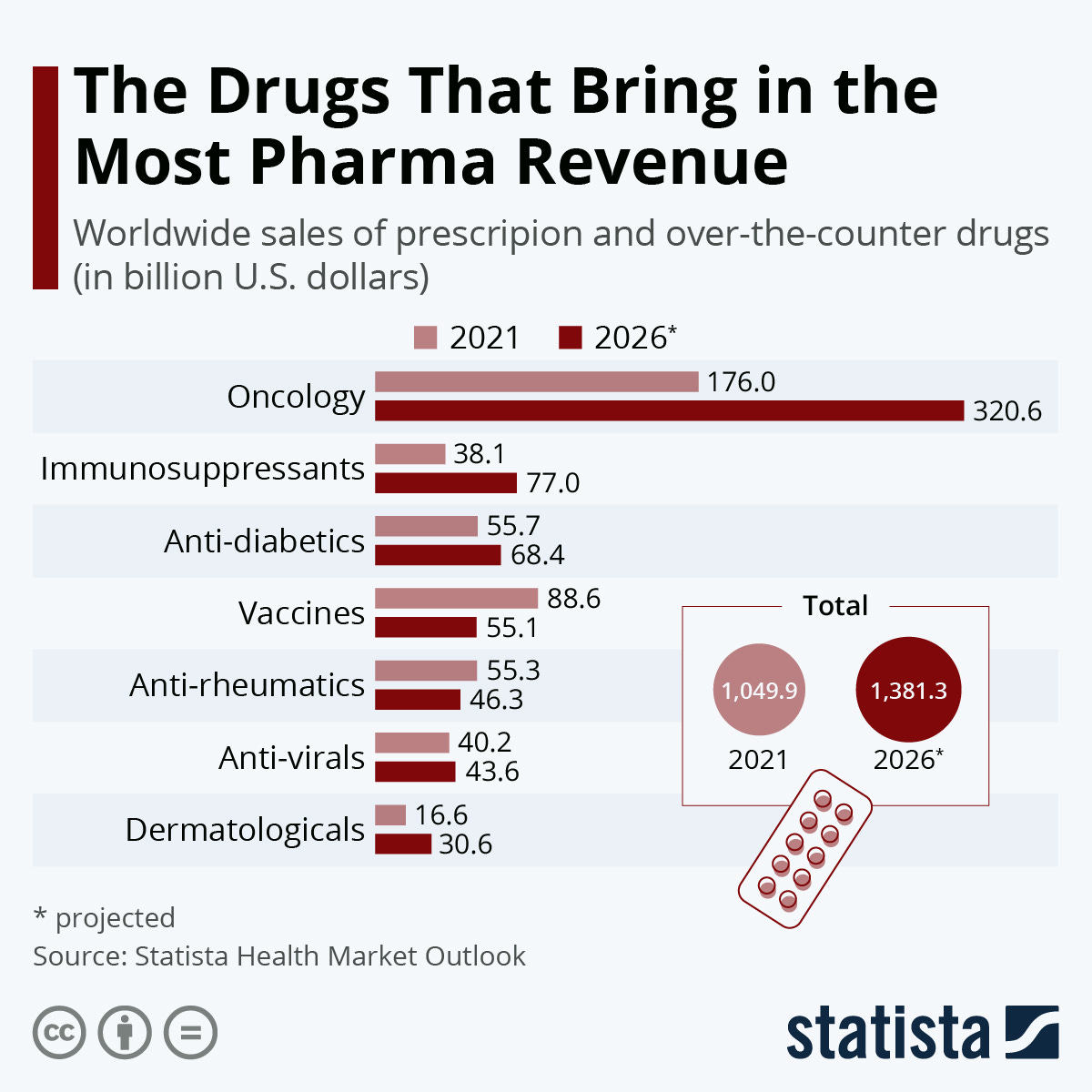
The oncology market has become the largest and most competitive segment of the global pharmaceutical industry. Companies that successfully combine scientific innovation, clinical trial execution, regulatory expertise, and global commercial capability are positioned to dominate the future of cancer care.
Table of Contents
- How We Ranked the Top Oncology Pharmaceutical Companies
- Global Oncology Market Overview 2026
- Top 20 Oncology Pharmaceutical Companies
- Future Trends Transforming Cancer Treatment
- Frequently Asked Questions
Global Oncology Market Overview 2026
The global cancer therapeutics market continues to expand rapidly due to several major trends:
- Increasing global cancer incidence: Aging populations, environmental factors, lifestyle changes, and improved cancer detection are increasing demand for innovative treatments.
- Shift from chemotherapy to precision medicine: Modern oncology increasingly focuses on identifying the molecular drivers of individual tumors and matching patients with targeted therapies.
- Explosion of immunotherapy: Checkpoint inhibitors targeting PD-1, PD-L1, and CTLA-4 have transformed treatment for melanoma, lung cancer, kidney cancer, bladder cancer, and many other malignancies.
- Rise of antibody-drug conjugates: ADCs act as "smart missiles" by delivering highly potent cancer-killing molecules directly to tumor cells while reducing systemic toxicity.
- Artificial intelligence in drug discovery: AI platforms are accelerating target discovery, molecule design, clinical trial recruitment, and biomarker identification.
How We Ranked the Top Oncology Pharmaceutical Companies
This ranking considers multiple factors rather than pharmaceutical revenue alone. The strongest oncology companies demonstrate leadership across scientific innovation, clinical development, commercial execution, and future pipeline potential.
Ranking Criteria
-
1. Oncology Revenue Strength
Current commercial success of cancer therapies and market presence. -
2. Research & Development Pipeline
Depth and quality of future oncology candidates. -
3. Breakthrough Technologies
Leadership in immunotherapy, ADCs, CAR-T, radiopharmaceuticals, and precision medicine. -
4. Clinical Trial Excellence
Ability to successfully develop and bring innovative cancer medicines to patients. -
5. Long-Term Oncology Strategy
Investment in next-generation cancer treatment platforms.
Top 20 Oncology Pharmaceutical Companies 2026
#1 Roche: The Global Oncology Powerhouse
Headquarters: Basel, Switzerland
Roche remains one of the world's most influential oncology companies and has built one of the strongest cancer portfolios in pharmaceutical history.
The company's oncology leadership comes from decades of investment in targeted therapies, diagnostics, and personalized medicine.
Major Oncology Medicines
- Herceptin (trastuzumab) – HER2-positive breast and gastric cancers
- Perjeta (pertuzumab) – HER2-positive breast cancer
- Tecentriq (atezolizumab) – PD-L1 immune checkpoint inhibitor
- Venclexta/Venclyxto (venetoclax) – leukemia treatment
- Gazyva/Gazyvaro (obinutuzumab) – blood cancers
Why Roche Leads Oncology
Roche's unique competitive advantage is the integration of pharmaceutical development with advanced cancer diagnostics.
The company pioneered the concept of personalized oncology by linking molecular testing with targeted therapies.
Key Oncology Strengths
- World-leading cancer diagnostics platform
- Strong breast cancer franchise
- Major immunotherapy presence
- Precision medicine leadership
- Deep clinical research capabilities
#2 Merck & Co.: The Immunotherapy Revolution Leader
Headquarters: United States
Merck transformed modern oncology through the success of Keytruda (pembrolizumab), one of the most important cancer medicines ever developed.
Keytruda: A Landmark Cancer Therapy
Keytruda is a PD-1 immune checkpoint inhibitor that enables the immune system to recognize and attack cancer cells.
It has become a foundational therapy across multiple cancer types including:
- Non-small cell lung cancer
- Melanoma
- Head and neck cancers
- Kidney cancer
- Bladder cancer
- Gastric cancer
Merck Oncology Strategy
- Expanding immunotherapy combinations
- Developing next-generation immune therapies
- Investing in precision oncology biomarkers
- Building oncology partnerships
#3 AstraZeneca: The Precision Oncology Innovator
Headquarters: United Kingdom
AstraZeneca has become one of the fastest-growing oncology companies through targeted therapies, antibody-drug conjugates, and precision medicine.
Major Oncology Products
- Tagrisso (osimertinib) – EGFR-mutated lung cancer
- Lynparza (olaparib) – PARP inhibitor for BRCA-associated cancers
- Imfinzi (durvalumab) – immune checkpoint inhibitor
- Enhertu (trastuzumab deruxtecan) – antibody-drug conjugate
AstraZeneca's Competitive Edge
The company has positioned itself at the intersection of molecular oncology, genomics, and targeted cancer treatment.
#4 Bristol Myers Squibb: Immuno-Oncology Pioneer
Headquarters: United States
Bristol Myers Squibb played a historic role in creating the modern immunotherapy era.
Major Oncology Medicines
- Opdivo (nivolumab) – PD-1 checkpoint inhibitor
- Yervoy (ipilimumab) – CTLA-4 checkpoint inhibitor
- Breyanzi – CAR-T cell therapy
Oncology Leadership Areas
- Immune checkpoint blockade
- Combination immunotherapy
- Cell therapy
- Hematologic malignancies
#5 Novartis: Precision Oncology and Radioligand Therapy Leader
Headquarters: Basel, Switzerland
Novartis has transformed itself into a major oncology innovator through leadership in targeted therapies, radioligand therapy, and cellular medicine. The company combines molecular diagnostics, precision medicine, and next-generation cancer treatments to address difficult-to-treat malignancies.
Major Oncology Medicines
- Kisqali (ribociclib) – CDK4/6 inhibitor for hormone receptor-positive breast cancer
- Pluvicto (lutetium vipivotide tetraxetan) – radioligand therapy for PSMA-positive prostate cancer
- Scemblix (asciminib) – targeted therapy for chronic myeloid leukemia
- Jakavi (ruxolitinib) – myelofibrosis and blood cancers
Novartis Oncology Innovation Platforms
Novartis is particularly strong in areas that represent the future direction of oncology:
- Radiopharmaceutical therapy: Using radioactive molecules attached to cancer-targeting compounds to selectively destroy tumors.
- Cell therapy: Developing engineered immune-cell approaches for hematologic cancers.
- Precision medicine: Matching therapies with specific molecular cancer drivers.
Future Outlook
Novartis is positioned as one of the leading companies in the emerging era of "precision cancer targeting" where treatments become increasingly individualized.
#6 Pfizer: Global Pharmaceutical Giant Expanding Oncology
Headquarters: United States
Pfizer has strengthened its oncology position through internal research and major strategic acquisitions.
Major Oncology Products
- Ibrance (palbociclib) – CDK4/6 inhibitor for breast cancer
- Xtandi (enzalutamide) – prostate cancer
- Padcev (enfortumab vedotin) – antibody-drug conjugate
Pfizer Oncology Strategy
- Targeted therapies
- Blood cancer medicines
- ADC technology
- Precision oncology platforms
#7 Johnson & Johnson: A Diversified Oncology Powerhouse
Headquarters: United States
Johnson & Johnson has maintained a significant oncology presence through innovative medicines targeting blood cancers, prostate cancer, and multiple myeloma.
Major Oncology Medicines
- Darzalex (daratumumab) – multiple myeloma
- Carvykti (ciltacabtagene autoleucel) – BCMA-directed CAR-T therapy
- Erleada (apalutamide) – prostate cancer
- Talvey (talquetamab) – multiple myeloma bispecific antibody
Johnson & Johnson Oncology Strengths
- Multiple myeloma leadership
- CAR-T cell therapy development
- Bispecific antibody platforms
- Strong global commercialization network
The Future of J&J Oncology
The company's future oncology growth is expected to come from immune-based therapies, cell therapy, and combination treatment strategies.
#8 AbbVie: Hematology-Oncology Specialist
Headquarters: United States
AbbVie has become one of the world's leading oncology companies through its success in blood cancer therapies, particularly leukemia and lymphoma.
Major Oncology Medicines
- Venclexta/Venclyxto (venetoclax) – chronic lymphocytic leukemia and acute myeloid leukemia
- Imbruvica (ibrutinib) – B-cell malignancies
- Epkinly (epcoritamab) – lymphoma bispecific antibody
AbbVie's Oncology Strategy
AbbVie focuses heavily on hematologic cancers where targeted therapies have dramatically changed patient outcomes.
- B-cell malignancies
- Leukemia
- Lymphoma
- Combination targeted therapies
Competitive Advantage
The company's expertise in cancer biology, apoptosis pathways, and immune-cell targeting has created a strong position in blood cancer treatment.
#9 Gilead Sciences: Cell Therapy and Oncology Immunology Leader
Headquarters: United States
Gilead Sciences entered oncology through its acquisition of :contentReference[oaicite:0]{index=0}, establishing itself as a global leader in CAR-T cell therapy.
Major Oncology Medicines
- Yescarta (axicabtagene ciloleucel) – CAR-T therapy for lymphoma
- Tecartus (brexucabtagene autoleucel) – mantle cell lymphoma and leukemia
- Trodelvy (sacituzumab govitecan) – antibody-drug conjugate
Why Gilead Matters in Oncology
Gilead represents the transition from traditional pharmaceuticals toward living medicines, where a patient's own immune cells are engineered to attack cancer.
Key Innovation Areas
- CAR-T cell therapy
- Antibody-drug conjugates
- Solid tumor immunotherapy
- Next-generation immune engineering
Future Outlook
The major challenge for Gilead is expanding cellular therapies beyond blood cancers into solid tumors, which remains one of oncology's greatest scientific challenges.
#10 Amgen: Biologics and Bispecific Antibody Pioneer
Headquarters: United States
Amgen has played an important role in oncology through biologics, targeted therapies, and innovative immune-based cancer treatments.
Major Oncology Medicines
- Blincyto (blinatumomab) – bispecific T-cell engager for leukemia
- Kyprolis (carfilzomib) – multiple myeloma
- Vectibix (panitumumab) – colorectal cancer
- Imlygic (talimogene laherparepvec) – oncolytic virus therapy
Amgen Oncology Innovation
Amgen has been a pioneer in developing therapies that redirect the immune system toward cancer cells.
Important Technology Platforms
- Bispecific antibody technology
- Immune-cell engagement
- Protein engineering
- Targeted biologic medicines
Future Direction
Amgen continues to explore next-generation immune therapies designed to improve cancer cell targeting while reducing toxicity.
#11 Daiichi Sankyo: The Antibody-Drug Conjugate (ADC) Revolution Leader
Headquarters: Japan
Daiichi Sankyo has emerged as one of the most important oncology innovators of the decade through its breakthrough antibody-drug conjugate (ADC) technology platform.
ADCs represent a new generation of cancer medicines designed as precision-guided weapons: an antibody identifies cancer cells while a linked payload delivers a powerful anti-cancer agent directly to the tumor.
Major Oncology Medicines
- Enhertu (trastuzumab deruxtecan) – HER2-targeted ADC for breast, gastric, and other cancers
- Datroway (datopotamab deruxtecan) – TROP2-targeted ADC
Why Daiichi Sankyo Matters
The company's ADC technology has reshaped expectations for targeted cancer therapy. Enhertu demonstrated that HER2 biology could be therapeutically exploited beyond traditional HER2-positive breast cancer.
Key Innovation Areas
- Antibody-drug conjugates
- Tumor-specific drug delivery
- Combination oncology strategies
- Biomarker-driven treatment selection
Future Outlook
Daiichi Sankyo is expected to remain one of the world's most influential ADC companies as pharmaceutical companies increasingly compete in the targeted delivery space.
#12 Eli Lilly: Oncology Growth Through Targeted Therapies
Headquarters: United States
Eli Lilly has expanded its oncology portfolio through targeted therapies and strategic investments in precision cancer medicine.
Major Oncology Medicines
- Verzenio (abemaciclib) – CDK4/6 inhibitor for breast cancer
- Jaypirca (pirtobrutinib) – targeted therapy for blood cancers
- Retevmo (selpercatinib) – RET-altered cancers
Lilly Oncology Strategy
The company focuses on genetically defined cancers where molecular testing can identify patients most likely to benefit from targeted treatments.
Growth Opportunities
- Precision oncology
- Biomarker-selected therapies
- Targeted kinase inhibitors
- Combination cancer treatments
#13 Bayer: Oncology Pioneer in Targeted Cancer Treatment
Headquarters: Germany
Bayer has maintained a strong oncology presence through targeted therapies, particularly in prostate cancer and radiopharmaceutical development.
Major Oncology Medicines
- Nubeqa (darolutamide) – prostate cancer
- Xofigo (radium-223 dichloride) – bone-metastatic prostate cancer
- Stivarga (regorafenib) – colorectal and gastrointestinal cancers
Bayer's Oncology Strengths
- Hormone-driven cancers
- Radiopharmaceutical therapy
- Targeted small molecules
- Precision oncology research
Future Direction
Bayer continues exploring cancer treatments that combine molecular targeting with innovative delivery technologies.
#14 Seagen: The ADC Specialist That Transformed Cancer Drug Delivery
Headquarters: United States
Seagen became one of the world's leading oncology biotechnology companies by pioneering antibody-drug conjugate technology.
Major Oncology Medicines
- Adcetris (brentuximab vedotin) – lymphoma
- Padcev (enfortumab vedotin) – bladder cancer
- Tukysa (tucatinib) – HER2-positive breast cancer
ADC Technology Leadership
Seagen helped establish ADCs as one of the fastest-growing categories in oncology.
The company's approach demonstrated that cancer therapy could move beyond simply killing rapidly dividing cells toward highly selective tumor targeting.
Legacy and Impact
- Advanced ADC science
- Improved cancer drug targeting
- Expanded treatment options for difficult cancers
#15 Regeneron Pharmaceuticals: Immunology Meets Oncology
Headquarters: United States
Regeneron has built a strong oncology pipeline by combining advanced antibody engineering, immune science, and genetic technologies.
Major Oncology Medicines
- Libtayo (cemiplimab) – PD-1 checkpoint inhibitor
- Dupixent research expansion programs – immune biology platform applications
Regeneron's Oncology Technology Platforms
- VelocImmune antibody technology
- Immune checkpoint research
- Bispecific antibody development
- Genomic medicine approaches
Strategic Importance
Regeneron represents the convergence of immunology and oncology, an area expected to generate major breakthroughs in future cancer treatment.
#16 Takeda Pharmaceutical: Global Oncology and Hematology Specialist
Headquarters: Japan
Takeda Pharmaceutical has established a strong oncology position through its expertise in hematologic malignancies, rare cancers, and targeted therapies.
Major Oncology Medicines
- Ninlaro (ixazomib) – multiple myeloma
- Adcetris (brentuximab vedotin) – lymphoma therapy
- Iclusig (ponatinib) – leukemia
Takeda Oncology Strengths
- Multiple myeloma treatments
- Hematologic cancers
- Targeted kinase inhibitors
- Rare cancer therapies
Future Outlook
Takeda continues investing in next-generation oncology platforms including immune therapies, targeted treatments, and precision approaches for difficult-to-treat cancers.
#17 Boehringer Ingelheim: Lung Cancer and Immuno-Oncology Innovator
Headquarters: Germany
Boehringer Ingelheim has become a significant oncology player through targeted therapies focused on molecular drivers of cancer.
Major Oncology Medicines
- Gilotrif (afatinib) – EGFR-mutated lung cancer
- Ofev (nintedanib) – oncology-related angiogenesis applications
Research Focus Areas
- Lung cancer
- Cancer immunology
- Targeted molecular therapies
- Tumor microenvironment research
The company's oncology strategy emphasizes understanding cancer biology and developing therapies against specific disease mechanisms.
#18 Servier: Precision Oncology and Rare Cancer Specialist
Headquarters: France
Servier has developed a growing oncology portfolio focused on targeted medicines and genetically defined cancers.
Major Oncology Medicines
- Tibsovo (ivosidenib) – IDH-mutated cancers
- Voranigo (vorasidenib) – IDH-mutated glioma
- Lonsurf (trifluridine/tipiracil) – gastrointestinal cancers
Servier Oncology Strategy
- Precision medicine
- Genomic cancer targets
- Rare tumor biology
- Brain cancer innovation
#19 BeiGene: China's Global Oncology Challenger
Headquarters: China
BeiGene has rapidly expanded from a Chinese biotechnology company into a global oncology competitor.
Major Oncology Medicines
- Brukinsa (zanubrutinib) – B-cell malignancies
- Tevimbra (tislelizumab) – PD-1 checkpoint inhibitor
Why BeiGene Matters
BeiGene represents the globalization of oncology innovation, combining large-scale clinical development with competitive drug discovery.
Growth Areas
- Immunotherapy
- Hematologic cancers
- Targeted therapies
- Global oncology expansion
#20 Astellas Pharma: Precision Oncology and Molecular Targeting Leader
Headquarters: Japan
Astellas has built an important oncology franchise through targeted therapies, particularly in prostate cancer.
Major Oncology Medicines
- Xtandi (enzalutamide) – prostate cancer
- Padcev (enfortumab vedotin) – bladder cancer
Astellas Oncology Strategy
- Hormone-driven cancers
- Targeted therapies
- Antibody-drug conjugates
- Precision oncology
Future Trends Transforming Oncology in 2026 and Beyond
1. Artificial Intelligence Will Accelerate Cancer Drug Discovery
Artificial intelligence is becoming one of the most important technologies in oncology. AI systems can analyze:
- Genomic sequencing data
- Medical imaging
- Clinical trial information
- Drug-target interactions
The next generation of oncology companies will increasingly combine biological science with computational intelligence.
2. Antibody-Drug Conjugates Become the Next Blockbuster Platform
ADCs are among the fastest-growing areas in cancer medicine. They combine:
- Cancer-targeting antibodies
- Highly potent drug payloads
- Precision delivery systems
Companies with strong ADC platforms are positioned to compete for leadership in future oncology markets.
3. Cell Therapy Expands Beyond Blood Cancer
CAR-T therapy has produced remarkable results in leukemia and lymphoma. The next challenge is applying cellular therapies to solid tumors.
Research areas include:
- CAR-T improvements
- CAR-NK therapies
- Engineered immune cells
- Personalized cancer vaccines
4. Radiopharmaceutical Therapy Creates a New Treatment Category
Radioligand therapies combine radioactive molecules with cancer-targeting compounds, creating highly focused tumor destruction.
This field is expected to expand significantly in prostate cancer and other solid tumors.
5. Precision Oncology Replaces One-Size-Fits-All Treatment
Future cancer treatment will increasingly depend on:
- Tumor genetics
- Biomarkers
- Immune characteristics
- Metabolic profile
Frequently Asked Questions (FAQ)
What is the largest oncology pharmaceutical company?
Companies such as Roche, Merck, Bristol Myers Squibb, AstraZeneca, and Novartis are among the world's most influential oncology pharmaceutical companies due to their commercial products, research pipelines, and cancer innovation platforms.
Which pharmaceutical companies lead cancer immunotherapy?
Merck, Bristol Myers Squibb, Roche, AstraZeneca, Regeneron, and Gilead have been major contributors to immune-based cancer treatment.
What are the fastest-growing areas in oncology?
The fastest-growing oncology technologies include antibody-drug conjugates, CAR-T therapy, radiopharmaceuticals, precision medicine, and AI-assisted drug discovery.
Are pharmaceutical companies replacing chemotherapy?
Traditional chemotherapy remains important, but oncology is moving toward more selective treatments designed to target cancer biology while reducing toxicity.
What is the future of cancer treatment?
The future of oncology will likely involve personalized combinations of targeted therapy, immune therapy, cellular medicine, metabolic approaches, and AI-guided treatment selection.
Conclusion: The Future Belongs to Precision Cancer Medicine
The world's leading oncology pharmaceutical companies are driving a historic transformation in cancer care.
The next decade will likely be defined by therapies that are:
- More personalized
- More targeted
- Less toxic
- Guided by molecular and immune information
From immunotherapy giants to ADC pioneers, CAR-T developers, and AI-powered biotechnology companies, these organizations are shaping the future of cancer treatment.


.png)


Comments