Global Healthcare and Pharmaceuticals Industry Report (2026 Trends)
Executive Market Summary
- R&D Momentum: Advanced oncology therapies, metabolic innovations (GLP-1 receptor agonists), and gene editing protocols are dominating global clinical pipelines.
- Geopolitical Rebalancing: While traditional Western conglomerates maintain strong revenue foundations, Chinese public-health enterprises—specifically Sinopharm Group—have fundamentally disrupted the global top-five leaderboard.
- The 2025–2026 Market Pivot: Traditional revenue lines are facing historic pressures as major small-molecule and biologic blockbusters hit their respective patent cliffs, clearing the path for an influx of biosimilars.
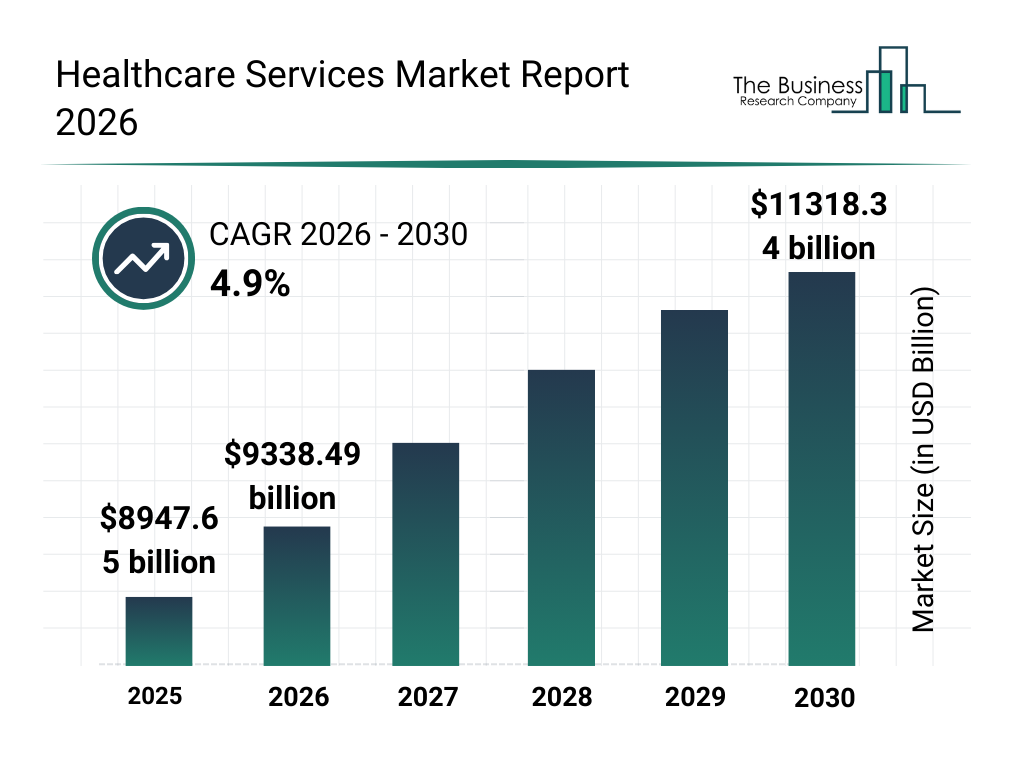
Figure 1: Global Healthcare Services Market Expansion reaching an estimated $9,338.49 Billion with a stable 4.9% CAGR.
Leading Healthcare & Pharmaceutical Entities
When organizing the sector by absolute revenue scale vs. speculative future growth, the market divides into two distinct classes: diversified distribution giants and high-margin pure-play innovators.
| Company Name | Core Market Segment | Primary Financial Metric | Strategic Catalyst |
|---|---|---|---|
| UnitedHealth Group | Payer / Care Delivery | >$350 Billion Revenue | Optum ecosystem integration |
| CVS Health | Pharmacy Retail / PBM | >$350 Billion Revenue | Caremark distribution pipelines |
| Sinopharm Group | Pharma Supply Chain / Retail | CNY 584.5 Billion Revenue | Centralized Chinese procurement insulation |
| Merck & Co. | Pure-Play Oncology Biotech | $64.2 Billion Pharma Revenue | Keytruda market dominance |
| Eli Lilly / Novo Nordisk | Metabolic Therapeutics | Market Cap Leadership | GLP-1 (Zepbound, Wegovy) expansion |
The Scale Leaders: UnitedHealth, CVS, and Sinopharm
UnitedHealth Group and CVS Health consistently defend their positions as the highest-grossing healthcare entities globally. Their massive revenues are sustained by managing extensive insurance networks and pharmacy benefit management (PBM) programs rather than relying strictly on clinical molecule pipelines.
Concurrently, Sinopharm Group has cemented its role as Asia's healthcare powerhouse. Recording full-year revenues of approximately CNY 584.5 billion (~$81.2 billion USD), Sinopharm represents a massive distribution and manufacturing layer that is virtually insulated from Western pricing headwinds. Their stable trajectory is further proven by steady quarterly revenue performance consistently exceeding CNY 141 billion.
The Innovation Ecosystem: Merck, J&J, and the GLP-1 Duopoly
On pure pharmaceutical performance, Merck & Co. leads Western markets with $64.2 billion in drug revenue, powered almost single-handedly by its anti-PD-1 oncology cornerstone, Keytruda. Johnson & Johnson follow closely at $57.1 billion, sustained by immunology and oncology powerhouses like Darzalex and Stelara.
However, the capital market conversation belongs to Eli Lilly and Novo Nordisk. Driven by unprecedented global demand for metabolic and anti-obesity therapeutics (tirzepatide and semaglutide), these companies have broken away from typical pharmaceutical valuation bounds, outstripping competitors in absolute market capitalization.
Macro Trends and Strategic Industry Priorities
1. Navigating the Multi-Billion Dollar Patent Cliff
The current operational cycle marks a major structural reset for legacy drug portfolios. Multi-billion dollar assets are losing their exclusivity window, triggering aggressive market entry strategies from generic and biosimilar producers:
- Stelara (Johnson & Johnson): Confronting direct biosimilar erosion in immunology spaces.
- Jardiance (Boehringer Ingelheim/Eli Lilly): Preparing for generic alternatives in the highly competitive SGLT2 inhibitor diabetes sector.
- Eylea (Regeneron/Bayer): Managing biosimilar alternatives in ophthalmology markets.
- Soliris (AstraZeneca) & Imbruvica (AbbVie/J&J): Entering late-stage lifecycle management phases.
Strategic Takeaway: While Western multinationals face a steep revenue cliff, firms like Sinopharm utilize this shift to scale up domestic generic production and broaden local institutional distribution.
2. The Next Generation Drug Launches
To offset patent losses, companies are accelerating novel drug rollouts with high blockbusting potential:
- Alyftrek (Vertex Pharmaceuticals): A breakthrough next-generation therapeutic for cystic fibrosis.
- Datopotamab Deruxtecan (Daiichi Sankyo/AstraZeneca): A highly targeted antibody-drug conjugate (ADC) designed for advanced solid tumors.
- Suzetrigine (Vertex Pharmaceuticals): A novel, non-opioid mechanism targeting neuropathic and acute pain channels.
- Aficamten (Cytokinetics): A first-in-class cardiac myosin inhibitor targeting hypertrophic cardiomyopathy.
3. Regulatory Shifts and Pricing Pressures
Global regulatory changes are forcing a reassessment of commercial launch strategies. In the United States, structural elements of the Inflation Reduction Act (IRA) are introducing direct drug price negotiations for Medicare portfolios, putting downward pressure on long-term lifecycle margins.
In contrast, Chinese operations are adapting to centralized volume-based procurement (VBP) programs. Sinopharm has aligned directly with these government supply chain modernization initiatives, capturing massive localized market share by offering unmatched logistical capacity across retail and hospital networks.
Strategic Outlook
The line separating success from stagnation in the global healthcare space depends entirely on two factors: scale efficiency and innovation velocity. High-volume distributors must continue expanding their supply chain frameworks into digital pharmacy and specialized therapeutics. Concurrently, pure-play biopharma companies must invest their GLP-1 and oncology windfalls into strategic biotech acquisitions (similar to Pfizer's targeted acquisition of Seagen) to ensure their pipelines remain robust ahead of the next patent cliff cycle.


.png)


Comments